
The scare of communicable diseases seems to be gripping the country with Maharashtra reporting 28 Zika cases this year, the highest since 2021.

'With the deployment of a higher degree of mechanisation, awarding contractual mining to MDOs and operational efficiency, we feel confident of achieving the desired target.'

Kerala has had 202 fatalities in 2024 so far. In July alone, there were 202,122 episodes of fever, 2,250 cases of dengue, 1,850 cases of mumps and several other illnesses. 10,000 cases of dengue have been reported from Karnataka. 1,000 swine flu cases have been documented in Rajasthan.
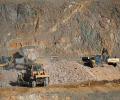
The Centre has increased the area granted to individual players by more than four fold in order to boost mining of critical minerals. Issuing an order on Tuesday, the government said, for mining leases, the area has been expanded from the current limit of 10 sq km to 50 sq km. For prospecting licences (granted in the case of composite licence), the limit has been increased from 25 sq km to 100 sq km.
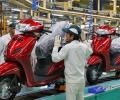
The battle for the top spot in the two-wheeler market is intensifying. The gap between Hero MotoCorp and Honda Motorcycle & Scooter India (HMSI) in retail sales narrowed to just 45,607 units in June. This improvement comes as HMSI has clawed back market share after dipping to a historic low of 18 per cent in May 2023. Now, the retail market shares of the two companies are 28.86 per cent and 25.54 per cent, respectively, compared to 35.54 per cent and 18.05 per cent in May 2023.

Priyanka's victory seems assured, but the broader implications for Kerala's political landscape and South Indian politics remain to be seen.
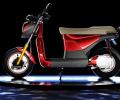
The government has taken a slew of steps to boost the sales of electric two-wheelers and three-wheelers under its Electric Mobility Promotion Scheme (EMPS) 2024, which includes allowing manufacturers to upload claims twice a month and gives them a 120-day window to submit it. The Rs 500-crore scheme -- which had replaced the flagship Faster Adoption and Manufacturing of Electric Vehicles (FAME) scheme-- comes to an end on July 31st.
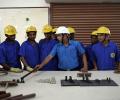
Severe skilled, unskilled shortage threatens to pull emergency brakes on India's industrial engine.

The Rs 500-crore Electric Mobility Promotion Scheme (EMPS) 2024, introduced by the Centre to provide incentives to the electric mobility industry, will conclude on July 31 with barely 3.6 per cent of the targeted vehicle sales achieved so far. This is in stark contrast to the earlier flagship Faster Adoption and Manufacturing of Electric Vehicles (FAME) scheme, which exceeded its sales targets. According to data from the Ministry of Heavy Industry (MHI), only 13,499 of the 372,215 targeted vehicles have been sold under the EMPS scheme.

In seeking visa approvals for engineers from China, the company has reasoned that India lacks the expertise to set up such a solar facility.

So far this year, around 839,545 electric vehicles have been sold, accounting for approximately 6.69% of the total 12,541,684 vehicles sold.
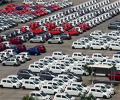
Passenger vehicle sales are expected to experience muted growth in the current financial year.
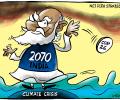
Three years after India declared its goal to become a net-zero economy by 2070, the policy design for achieving the target has begun, with the NITI Aayog forming dedicated multi-sectoral committees to prepare a transition plan. In 2021, India joined a select group of nations that set a target year for becoming net-zero carbon economy. At COP26 in Glasgow, Prime Minister Narendra Modi outlined a five-pronged 'Panchamitra' climate action target for India and committed to a net-zero target by 2070, joining nations like the US, the UK, and China.

'Corporations that were recruiting 15 or 20 [students] have reduced the number to two or three.'

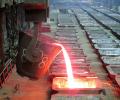
India on Monday announced the results for the country's first critical mineral auction. Amid the tepid response from big players, the list of successful bidders included some lesser known names. A total of five companies secured bids for six critical mineral blocks of graphite, manganese, phosphorite, lithium, and rare earth elements with auction premiums ranging from 13.05 per cent to 400 per cent.
The maiden, critical mineral auction in India has failed to enthuse the mining industry, with the first tranche achieving less than a 50 per cent success rate and the auction of several mines was cancelled owing to low response. The results, announced by the Ministry of Mines on Monday, showed that six lesser-known companies emerged as preferred bidders. Among these were Agrasen Sponge, Kundan Gold Mines, Dalmia Bharat Refractories, Sagar Stone Industries, and Maiki South Mining.

Athletes and climate experts have expressed concerns that extreme heat could lead to severe health issues, including the risk of sportspeople collapsing or, in the worst-case scenarios, dying during the events.

Since 2008, the Bureau of Energy Efficiency is running a star rating programme, under which electric equipment are rated according to their efficiency. This in turn helps the consumers save electricity.
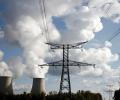
Rising energy demand could tilt India's energy basket towards fossil fuels from coal to oil, natural gas.
 © 2025 Rediff.com - Investor Information - Advertise with us - Disclaimer - Privacy Policy - Sitemap - Feedback - About us - Terms of use - Grievances